ROBOT ARM DEVELOPMENT

Robot arm development

We develop perception, learning and control software together with robot arms, hands and sensors. We design grasping, support and wrapping for the target object, connecting simulation with hardware validation.

Software through hardware

Designing hands and motion
around the task.

Objects with varying shape or stiffness, transport that needs support, and connections that require controlled force call for coordinated hardware, perception and motion. We also consider configurations that reuse existing arms and equipment.

  • Perception and sensors for the object and task conditions
  • Learning and control for grasping, reorientation, paths and force
  • Hardware design combining five-finger hands, trays and fixtures
  • Physics simulation, hardware validation and improvement after deployment
Illustration of a five-finger hand grasping a flexible object while a second robot arm supports it from below with a V-shaped fixture
A hand to grasp, an arm to support. Their roles are combined around the object.
HANDS & APPLICATIONS

Choose a way to hold each object.

These are proposals and development concepts. We review materials, weight, shape, quality requirements and site equipment to define configurations and validation scope.

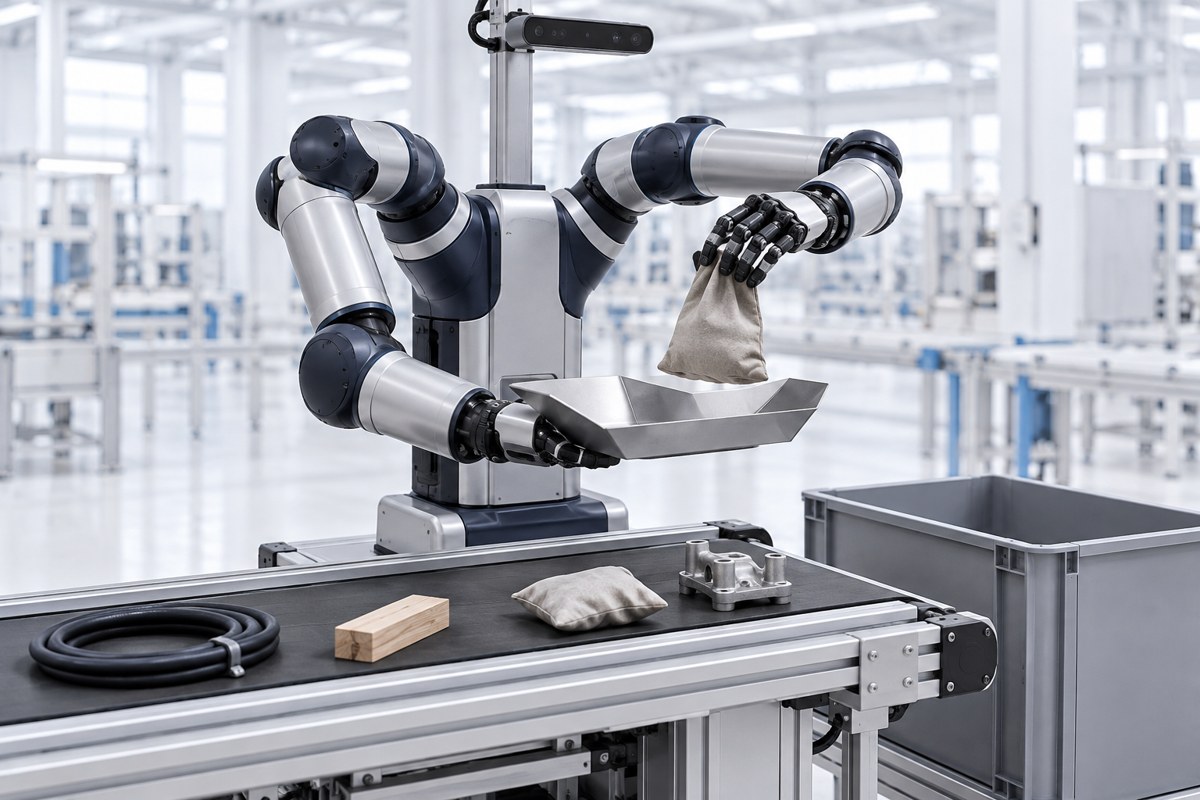
Concept of a dual-arm robot with a five-finger hand and a supporting tray
Proposal

Five-finger hands and dual-arm picking

A five-finger hand picks up the object while a tray or V-shaped fixture on the other arm supports it. We evaluate grasping, support, reorientation and transport for irregular or flexible objects.

Separate grasping from support

We explore multiple contact points that follow the object’s shape while the second arm supports it from below. This proposal divides grasping and support for bags and flexible objects whose pose may be difficult to stabilize by grasping alone.

What we evaluateTests vary object type and pose, checking grasp success, dropped objects and transport time.
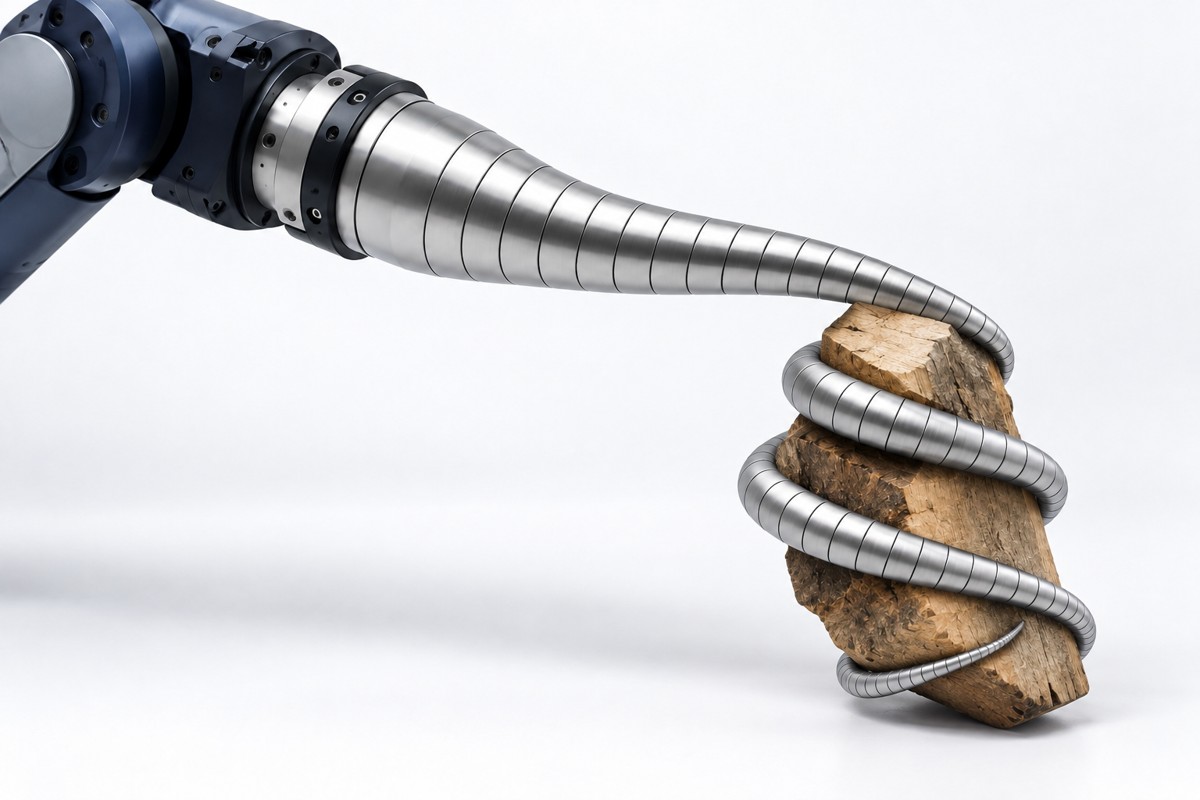
Concept of one long tapered metal arm with no suction cups winding multiple times around an object
Development concept

Long wrapping end effector

For objects that are difficult to hold with fingertips, a long arm would wrap around and support the object. Nicknamed the “octopus arm”, the concept uses ONE metal arm with no suction cups, thick at its base and tapering toward the tip. Its body would wind around the object multiple times to improve holding reliability.

Use the length of the arm to surround the object

Multiple turns of the long arm would increase the contact area around the object. We aim to adjust wrapping and contact pressure for shapes that are difficult to pinch with fingertips.

What we evaluateWe plan to evaluate holding force, slip, contact pressure and release for each target condition, including differences in material, weight, friction, number of wraps and wet surfaces.

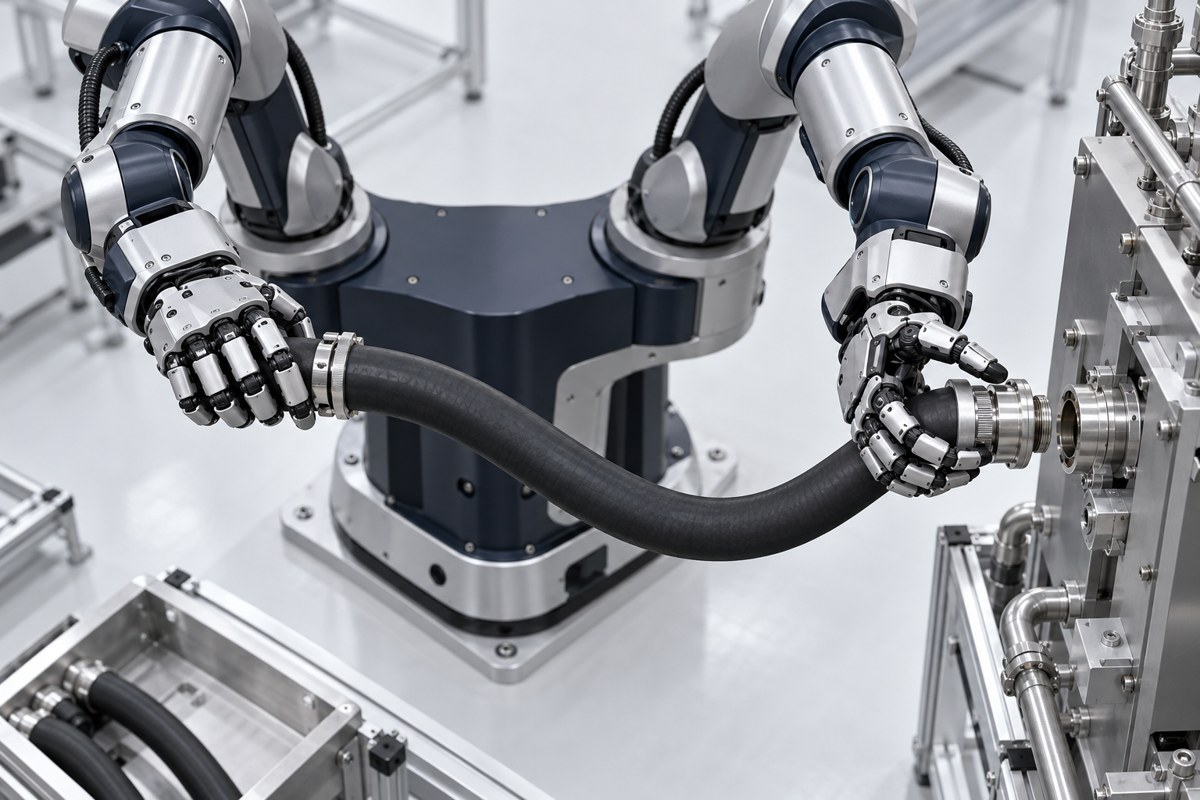
Concept of two robot arms supporting and aligning a hose for connection
Proposal

Hose and cable connection

One arm supports a flexible object while the other adjusts position and force to connect it. Vision and force information help address bending, misalignment and insertion force.

Divide support and connection between two arms

One arm supports the flexible object while the other adjusts alignment and force. We examine assembly tasks that require more than position matching, using vision and force information.

What we evaluateTests vary diameter, material and pose, checking connection success, time and applied force.

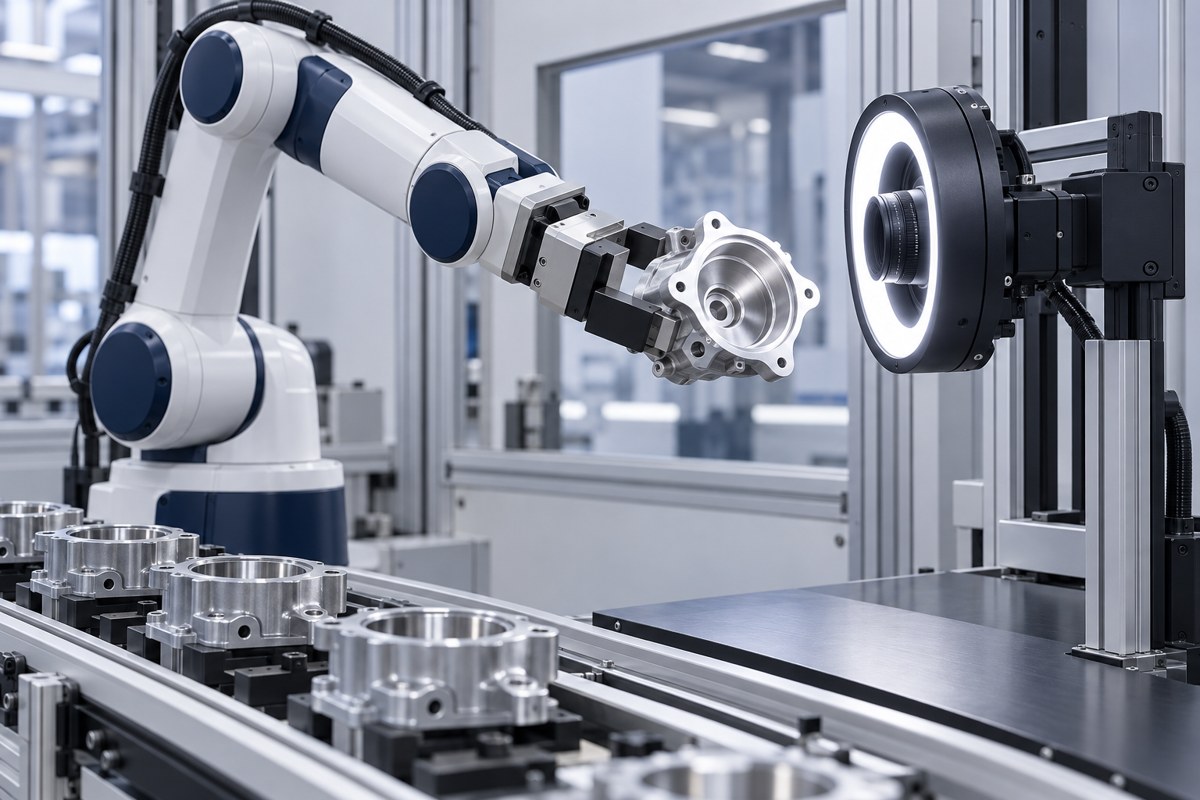
Concept of a robot reorienting a part in front of a camera and inspection light
Proposal

High-speed inspection and reorientation

We combine lighting and imaging with robotic changes of viewpoint, reorientation and transport. We consider lighting and poses that help distinguish machining marks from scratches and reveal recessed areas.

Design viewing and handling together

Changing a part’s pose and viewpoint can expose recessed areas for imaging before transport. We coordinate lighting, cameras and reorientation to examine hard-to-see surfaces.

What we evaluateWe evaluate missed defects, false detections and inspection/transport time to balance quality and speed.

VALIDATION

Evaluate hardware and control under the same conditions.

We examine slip, drops, failed reorientation and cycle times as well as successful operations. We correct differences between simulation and hardware, and consider recovery procedures and human responsibilities when planning deployment.

Get in touch

Contact

From standalone physics simulation to robotics and improvements after deployment, tell us about your objects and operational challenges.

contact@kiptech.co.jp