
What we offer

Services

We use physics simulation and AI to develop robots for your objects and operating conditions, from validation and hardware application to improvement after deployment.

Services

Services available today

Start with the stages you need. We agree on scope and deliverables after reviewing your tasks, equipment and data.

01

Problem definition & development planning

We review tasks, quality requirements and site equipment to define the scope and evaluation metrics.Example deliverables: Development plan and evaluation criteria
02

Custom physics simulation

We model material deformation, contact and solid–fluid interactions to build environments for design, analysis and motion validation. Standalone simulation projects are welcome, with no robot deployment required.Example deliverables: Simulation environment and analysis results
03

Synthetic data & AI training

We combine simulation and recorded site motions to design training and evaluation environments for perception and manipulation.Example deliverables: Training data and learning/evaluation environments
04

Robots & dedicated machinery

We select arms, hands, sensors and control software for the task, including options that reuse existing equipment.Example deliverables: Equipment configuration, prototypes and control software
05

Hardware validation & deployment

We test different objects and operating conditions, then correct differences between simulation and hardware.Example deliverables: Hardware evaluation results and deployment plan
06

Improvement after deployment

We review failure conditions, cycle times, setup and rework to improve both the technology and the workflow.Example deliverables: Improvement priorities and model/motion update plans
Proposals & Concepts

Starting with your challenges

The following are proposals and development concepts. Feasibility and scope depend on your objects, equipment and quality requirements.
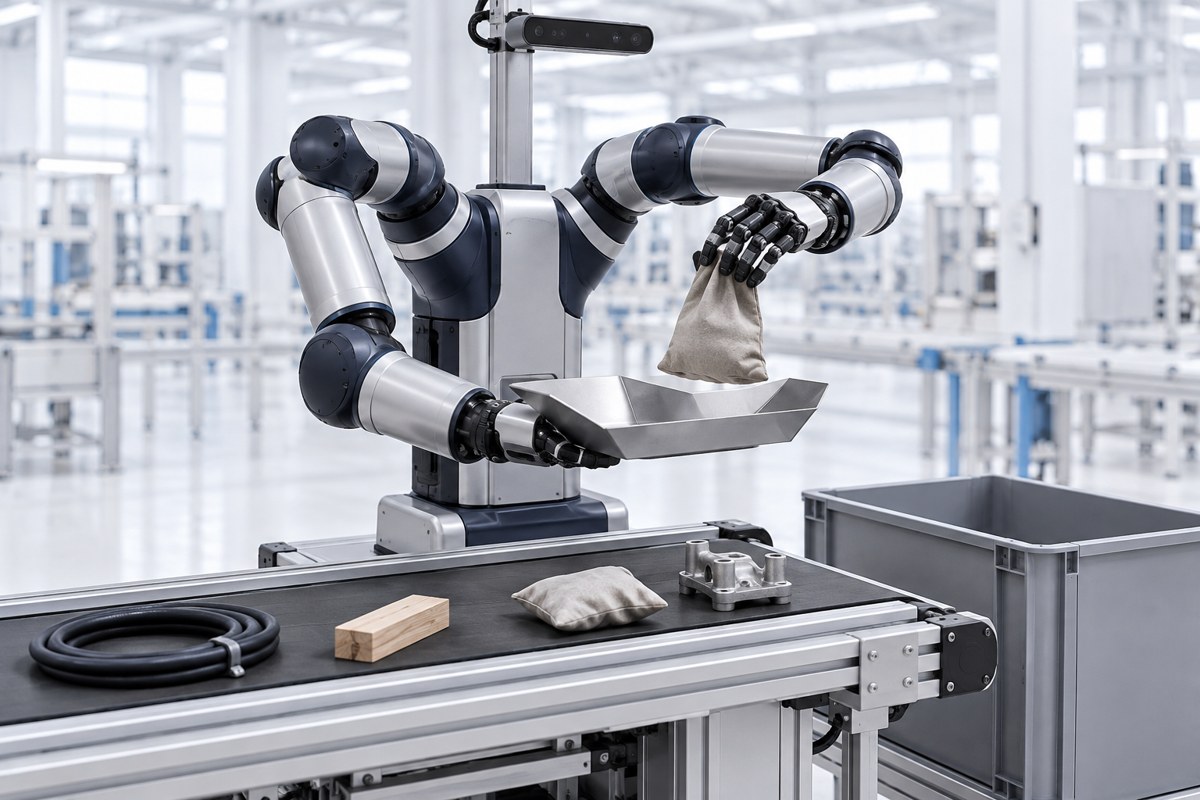
Concept of a dual-arm robot with a five-finger hand and a supporting tray
Proposal

Dual-arm picking and transport

A five-finger hand picks up the object while a tray or V-shaped fixture on the other arm supports it. We evaluate grasping, support, reorientation and transport for irregular or flexible objects.

What we evaluateTests vary object type and pose, checking grasp success, dropped objects and transport time.
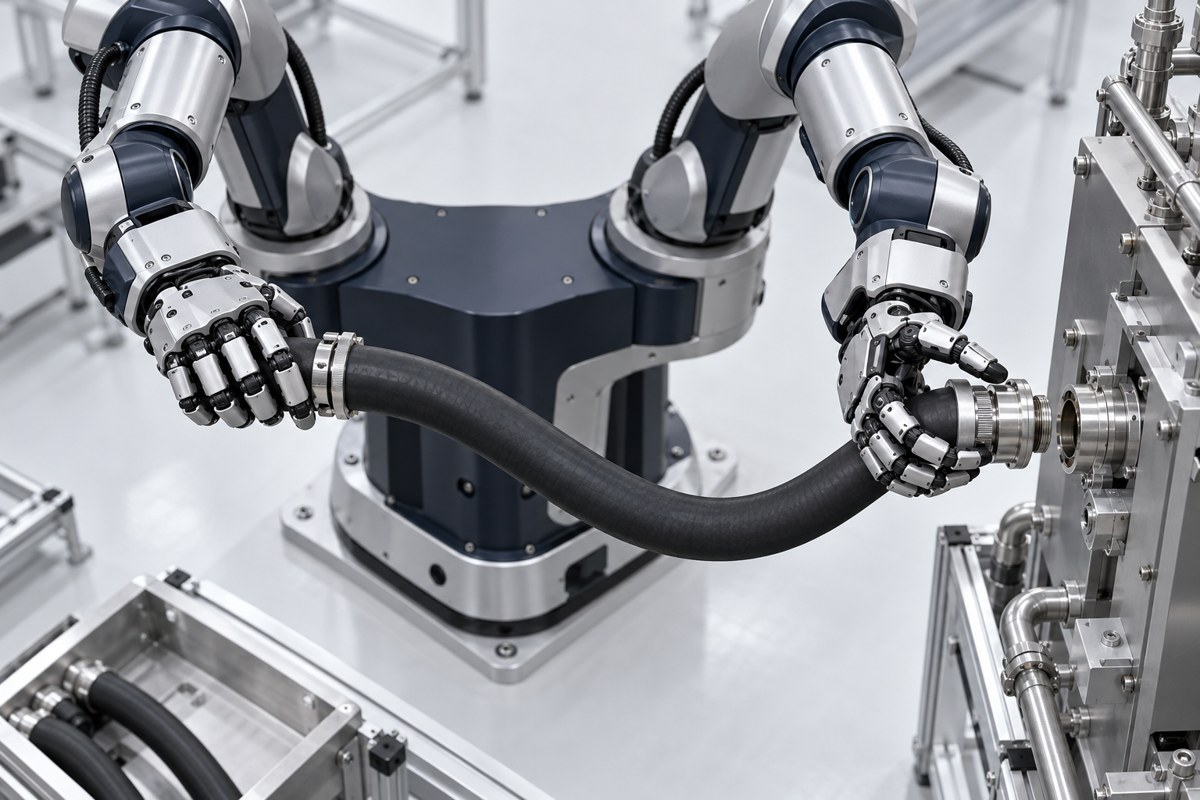
Concept of two robot arms supporting and aligning a hose for connection
Proposal

Hose and cable connection

One arm supports a flexible object while the other adjusts position and force to connect it. Vision and force information help address bending, misalignment and insertion force.

What we evaluateTests vary diameter, material and pose, checking connection success, time and applied force.
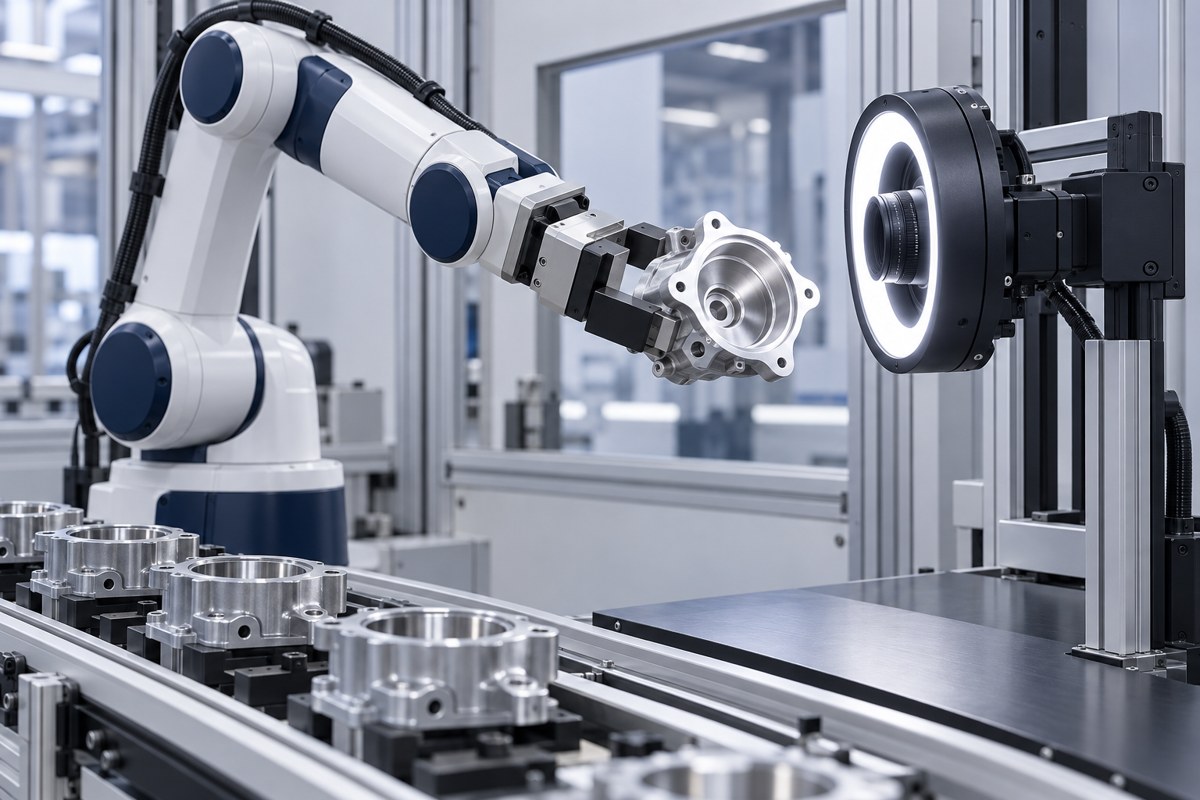
Concept of a robot reorienting a part in front of a camera and inspection light
Proposal

High-speed inspection and reorientation

We combine lighting and imaging with robotic changes of viewpoint, reorientation and transport. We consider lighting and poses that help distinguish machining marks from scratches and reveal recessed areas.

What we evaluateWe evaluate missed defects, false detections and inspection/transport time to balance quality and speed.
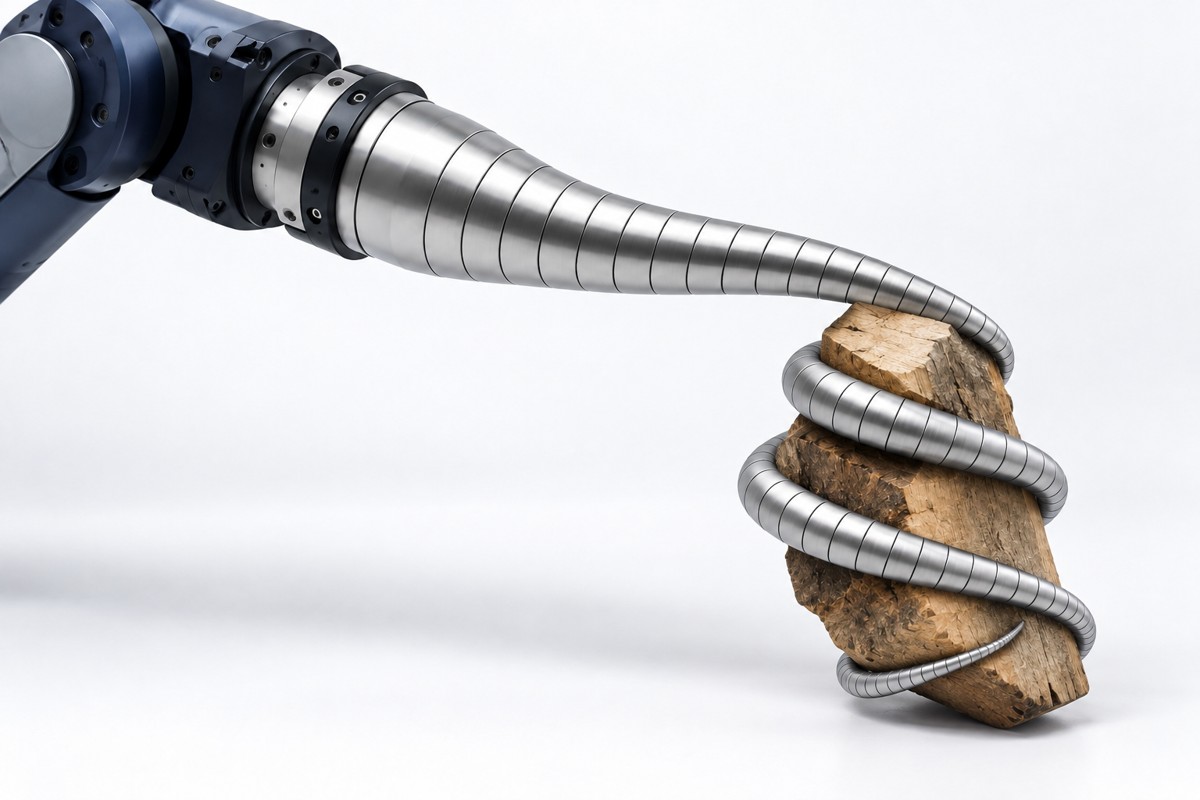
Concept of one long tapered metal arm with no suction cups winding multiple times around an object
Development concept

Long wrapping end effector

For objects that are difficult to hold with fingertips, a long arm would wrap around and support the object. Nicknamed the “octopus arm”, the concept uses ONE metal arm with no suction cups, thick at its base and tapering toward the tip. Its body would wind around the object multiple times to improve holding reliability.

What we evaluateWe plan to evaluate holding force, slip, contact pressure and release for each target condition, including differences in material, weight, friction, number of wraps and wet surfaces.
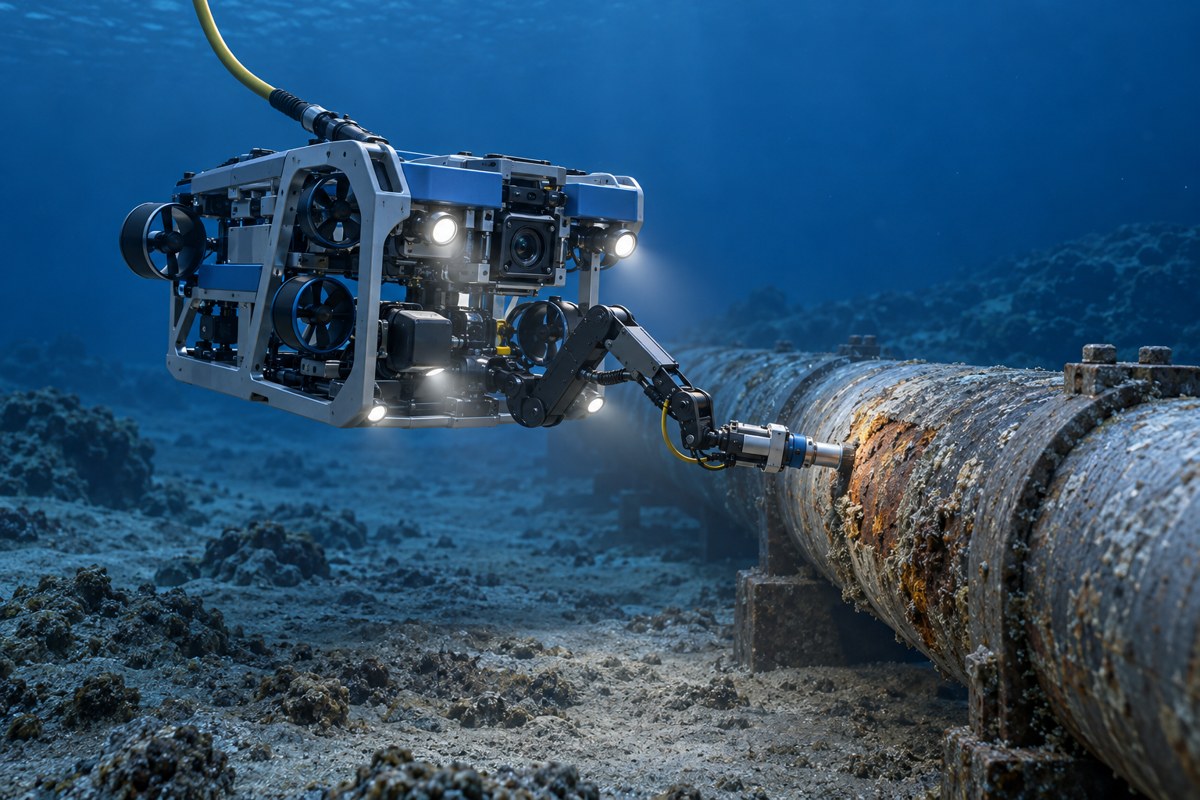
Concept of an ROV and manipulator approaching an underwater pipe
Development concept

Ocean and underwater operations

This autonomy concept connects ROV motion and station keeping, image-based damage detection, arm path following and result verification. Intended applications include inspection and pipe repair.

What we evaluateWe plan staged validation of currents, contact, station keeping and work quality. Underwater welding validation or certification has not been completed.

Process

From discussion to validation, deployment and improvement

01

Define the task

Review tasks, objects, equipment and quality needs. Agree on validation scope and metrics.
02

Run a focused proof of concept

Use simulation or prototypes to identify successes, failures and unresolved issues under challenging conditions.
03

Plan deployment

Design equipment, control and operations from the results, including human responsibilities and recovery procedures.
04

Operate and improve

Review motions, cycle times, setup and rework, then plan improvements to models, control and workflows.
Get in touch

Contact

From standalone physics simulation to robotics and improvements after deployment, tell us about your objects and operational challenges.

contact@kiptech.co.jp